
Emergency Chimney Sweep Near Me: What Bakersfield Homeowners Should Do First
When a chimney problem hits, most people grab their phone before they grab control of the situation. That order is backwards. The first two minutes of a chimney emergency, whether it’s a fire in the flue or a room full of smoke, are handled with your hands and your head, not a call. A sweep can be at your door fast, but you’re the one standing in the room when it starts. This guide walks through what to actually do, in order, so a bad moment in a Bakersfield home doesn’t turn into a worse one.
If you’d rather not work through a checklist with a fire burning, call (833) 605-6632 and we’ll talk you through it. We answer 24/7.
What Are the First Steps When Your Chimney Is in Trouble?
Stop the fire from getting more air, then get people and pets clear, then call. That’s the sequence. Most chimney emergencies get worse because the fire keeps being fed while everyone stands around deciding what to do.
Here’s the order we walk homeowners through:
- Cut the air supply. Close the damper if you can safely reach it. Shut the glass doors on the fireplace. If the fire is in a wood stove, close the stove’s air controls all the way down and latch the door. A fire inside a flue needs oxygen like any other fire, and you’re starving it.
- Get out of the room, and get everyone else out of the house if you see or hear something that doesn’t look like a normal fire. We’ll get to how to tell that apart in the next section.
- Move cars and anything flammable away from the exterior chimney. If you can safely step outside, check whether embers or sparks are coming out the top.
- Call the fire department if you have any doubt at all. A chimney fire that has spread into the structure is a house fire, and that’s their job, not ours.
- Then call a sweep for an inspection and, if the flue survived intact, a cleaning once things are cool.
What most people never do is the damper step. They smell smoke, they panic, they call a number, and meanwhile the fire keeps pulling air up a flue that’s already compromised. Closing off the air does more in two minutes than any phone call can. None of this means you should fight a fire yourself. It means you should take away its fuel before you do anything else.
How Do You Tell a Chimney Fire from Heavy Creosote Smoke?
A chimney fire and heavy smoke from creosote buildup are two different problems, and they don’t get the same response. A real chimney fire is loud and violent. Creosote smoke is quiet and thick. Getting this call wrong is the difference between waiting for a cleaning and calling 911.
What a chimney fire usually sounds like and looks like:
- A low rumble or roaring that sounds like a freight train or a distant jet, often building over a minute or two
- Popping and crackling that’s louder than the normal sound of a fire in the box
- Dense, dark smoke pushing out of the top of the chimney, sometimes with visible flames
- Warped or discolored damper, a heat-distorted cap, or blackened creosote flaking down into the firebox
Heavy creosote smoke, by contrast, tends to be a slow roll of smoke into the room with no rumble and no roaring. It usually means the flue is blocked or restricted, or that the chimney is struggling to draft. That’s still a problem, and you shouldn’t light another fire until someone looks at it, but it’s not a fire-in-the-flue emergency. The response to smoke is shut the damper, open a window, get the fire out safely and wait for an inspection. The response to a rumble is get everyone out and call the fire department.
In our experience, homeowners tend to underreact to the rumble. A chimney fire can burn hot enough to crack a clay flue liner without ever showing flames at the top. If you’re not sure which one you heard, treat it as the fire and let the fire department tell you otherwise.
What Should You Have Ready Before You Call a Chimney Sweep?
Have four things ready before you dial: what you saw or heard, whether the fire is still burning, what type of appliance you have, and your address. A sweep can triage most situations by phone in a couple of minutes if you can answer those four questions clearly.
Here’s what actually helps the person on the other end:
- What happened, in plain words. “There was a roar and dark smoke out the top” tells us more than “it’s acting weird.” Say whether you saw flames, heard popping, or just smelled smoke.
- Is the fire out? Fully out, smoldering, or still burning. This changes everything about what happens next.
- What you’re burning in. Open wood fireplace, gas insert, wood stove, or pellet stove. Each one fails in its own way.
- When it was last swept. An estimate is fine. “Never” is a perfectly good answer and one we hear more than you’d think.
- What the appliance is doing now. Smoke in the room? Smell that won’t clear? A cap sitting crooked on the roof?
With those answers, we can usually tell you whether the situation needs a same-day visit or whether it can safely wait for the next opening. Neither answer is a sales pitch. A flue that’s had a genuine fire in it gets inspected before anything else happens, and sometimes a cleaning themselves needs to wait until we’ve confirmed the liner is intact. We’d rather tell you to hold off than run a brush up a flue that’s already damaged.
Call (833) 605-6632 with those four answers in hand. We answer 24/7. Fast dispatch from 7am to 7pm, Sunday through Friday, and we’re closed on Saturday, so a weekend call gets booked into the next opening.
Which Bakersfield Situations Most Often Trigger Emergency Calls?
Most emergency calls in Bakersfield fall into three buckets: weather-driven blockages, storm-damaged caps, and first-of-season fires in a chimney that’s been idle for months. Knowing which one you’re in tells you a lot about what the fix looks like.
Wind-event blockages. Bakersfield gets wind events that push debris, dust and loose material into flues and across roofs. A flue that drafted perfectly in October can start smoking into the room after a big blow, not because the chimney changed, but because the flow at the top did. A blocked flue is the more dangerous version of the same story, and it can force carbon monoxide back into the house instead of up the chimney.
Post-storm cap damage. A cap that’s been knocked loose or cracked lets water and animals straight into the flue. Homeowners often find out the hard way when they light the first fire and get smoke in the room instead of a draft. From the ground, a tilted cap is easy to miss. From the roof, it’s obvious.
First-of-season fires in long-idle chimneys. This is the big one. A chimney that sat unused since last spring has had months for animals to nest, for creosote to harden, and for a cap to fail quietly. Light a fire in it and you find out all at once. In our experience, the first cold snap of the year generates more emergency calls than any storm. The chimney isn’t broken. It just wasn’t ready, and nobody checked before lighting it.
The common thread in all three: a proper inspection before the season starts prevents nearly all of them. Sweeping, inspecting, and repairing as one visit means the whole system gets checked, not just the flue. When something is off, we find it and fix it in the same engagement rather than handing you off to someone else.
What Can an Emergency Chimney Sweep Actually Do, and What Has to Wait?
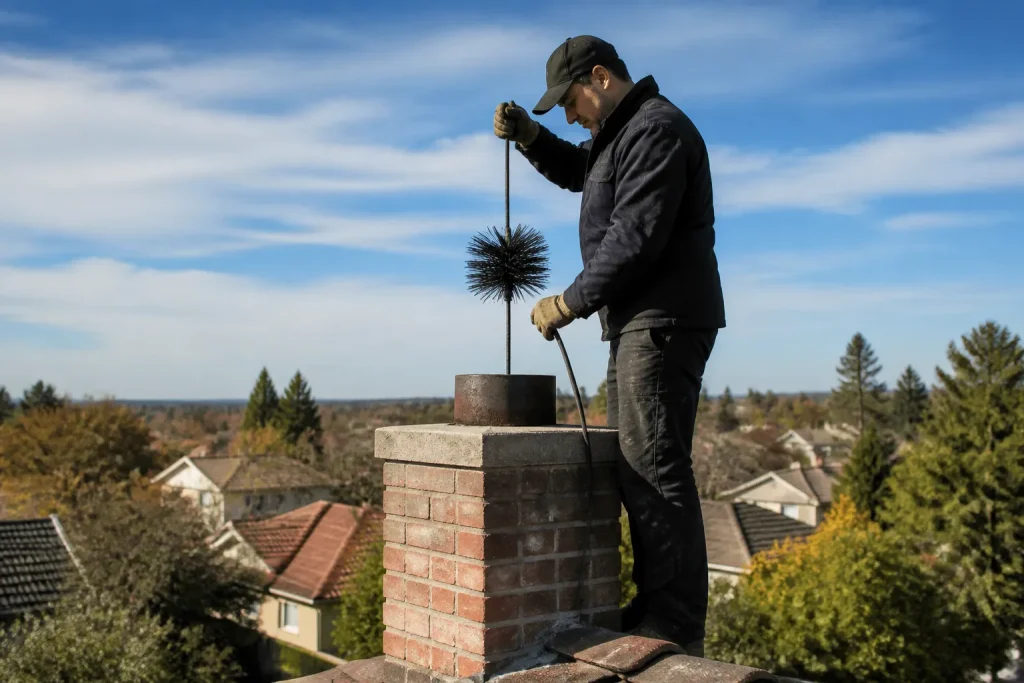
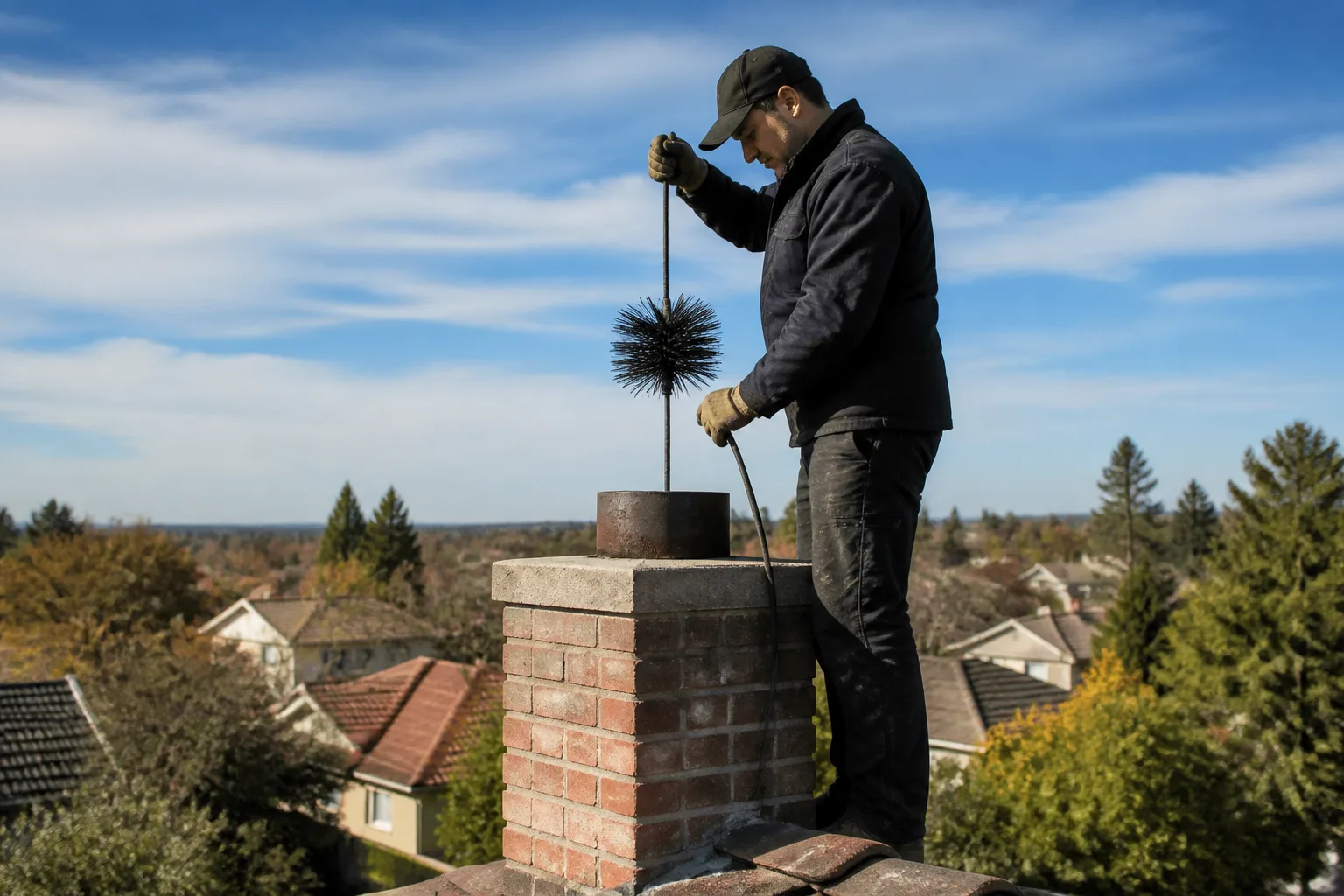
A sweep can clear a blocked flue, remove creosote, inspect the liner, and document damage. A sweep cannot clean a flue that’s structurally compromised, and no honest technician will. Some damage has to be assessed before any brush goes up the chimney.
Here’s where the line sits:
- Cleaning can happen right away when the flue is intact and the problem is creosote or a blockage. That’s the routine case, and it resolves the smoke.
- Cleaning has to wait when there’s evidence of a fire in the flue, cracked or missing liner tiles, or distortion of the damper or cap. Running a brush through a cracked liner can turn a repairable problem into a full reline.
- Repair work follows the assessment. Once we know the condition of the liner, we can talk about the fix. HeatShield restoration handles deterioration in qualifying liners without a full replacement. A DuraFlex liner system covers the cases that need full relining. Both are professional-grade products, not supply-house shortcuts.
That’s the part most emergency calls don’t expect. The fix isn’t always “sweep it and you’re done.” Sometimes it’s “sweep it, then repair the liner that the fire damaged.” Because we sweep, inspect and repair under one roof, that conversation happens while we’re standing in your living room, not after three callbacks to three different companies.
Findings get documented in writing, with photos, so you have a record for your insurer, a future sale of the house, or your own file. You see what we see. If something can safely wait until next season, we tell you that too.
When to call a pro
Call us when you smell smoke that won’t clear, see a cap sitting crooked, hear a rumble you can’t explain, or realize the chimney hasn’t been touched in a year. Call the fire department first if you’re seeing flames or the fire has spread. Call (833) 605-6632 for the rest. Estimates are free, and the price is set per job by a written estimate before any work begins.
Related services in Bakersfield: our chimney sweep handles cleaning and creosote removal, our chimney repair covers liner and structural fixes, and both are booked through the same team. If you’re new to the area or new to the house, start with a look at how we work in Bakersfield.
The Bottom Line
The best emergency chimney response starts before you call anyone. Cut the air supply. Get people clear. Call the fire department if you heard a roar or saw flames. Then call a sweep, with your four answers ready, and let a professional triage by phone. Most “emergencies” turn out to be blockages or a first-of-season fire that a pre-season inspection would have caught, and a handful turn out to be real structural damage that a sweep alone can’t fix.
What makes the difference in all of it is documentation. You should know exactly what’s wrong with your flue, see the evidence, and get a written record you can hand to an insurer or keep for later. That’s the standard we sweep to, every time, because there’s no partial cleaning and no skipped section that pays off later.
Our technicians have up to 9 years of experience with everything from a routine sweep to liner restoration, and we work with professional-grade brands like HeatShield, Gelco, Olympia Chimney and Famco on repair work. Call Harvest Chimney Sweep at (833) 605-6632 for a free estimate. We answer 24/7. Fast dispatch from 7am to 7pm, Sunday through Friday.
Frequently Asked Questions
A chimney sweep in Bakersfield typically runs $150 to $350 for a standard cleaning and inspection, and any repair work is quoted separately after we’ve seen the condition of the flue. The written estimate sets the final price before work starts, and the estimate itself is free. Call (833) 605-6632 for an exact quote – estimates are free.
Yes, in most cases. Once the flue is cleared and inspected and the creosote is gone, a standard wood-burning fireplace is ready for a fire the same day. If the inspection turns up a damaged liner or a failed cap, we’ll tell you before you light anything, and that’s the one exception to the “ready now” answer. Call (833) 605-6632 if you’re not sure where your chimney stands.
Skipping a season lets creosote build up inside the flue, and thick creosote is what fuels a chimney fire. It also gives animals and debris months to move in, and lets a small cap crack turn into a water problem in the liner. The risk is small in any single crackle-free fire and real over enough fires. Call (833) 605-6632 to get it checked before the first fire of the season.
Yes. A house that’s new to you has a chimney history you don’t know, and a prior owner’s sweep schedule is not something you can verify. A first inspection with documented findings gives you a baseline you can track over time. Call (833) 605-6632 to book one.
Written by the team at Harvest Chimney Sweep.
Need Chimney Cleaning Help?
Call Harvest Chimney Sweep - licensed & insured, with free written estimates in Bakersfield.
(833) 605-6632