
Last updated November 15, 2026
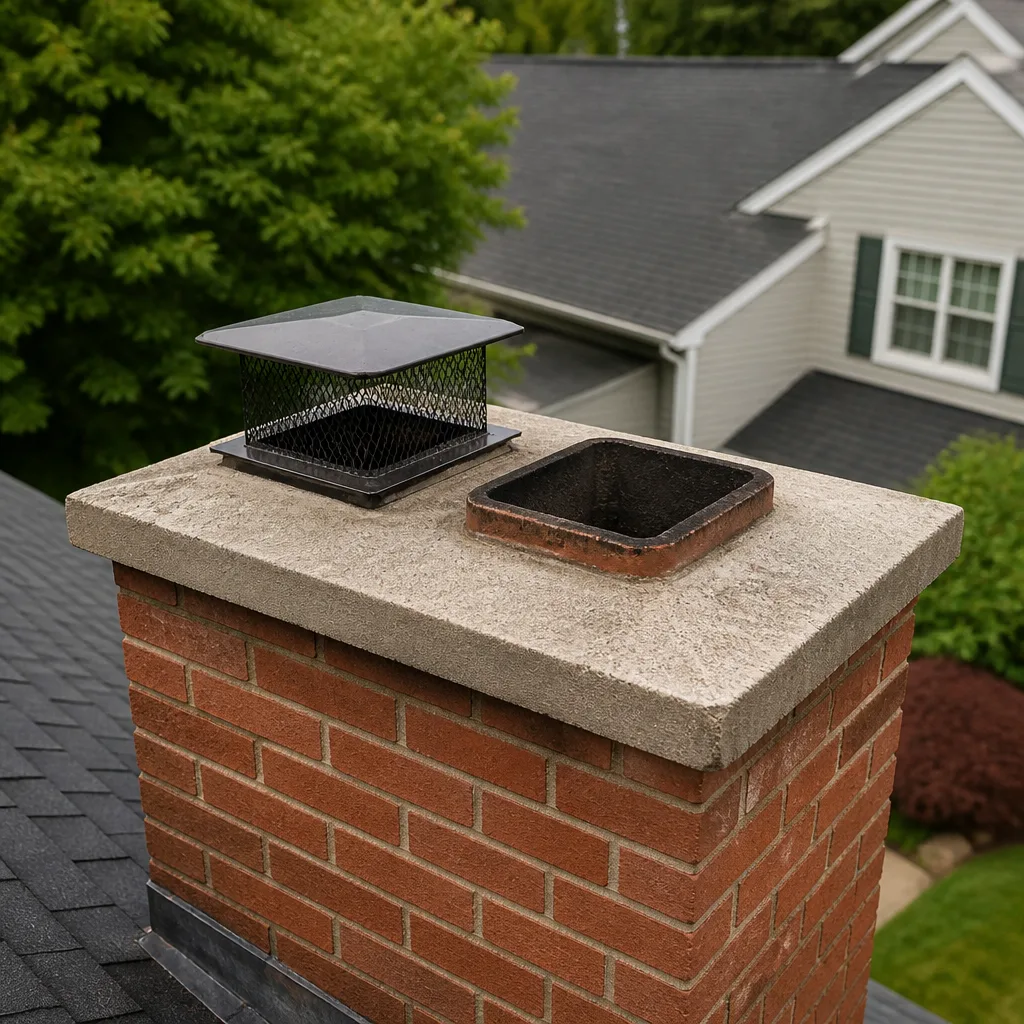 Sweep & inspection
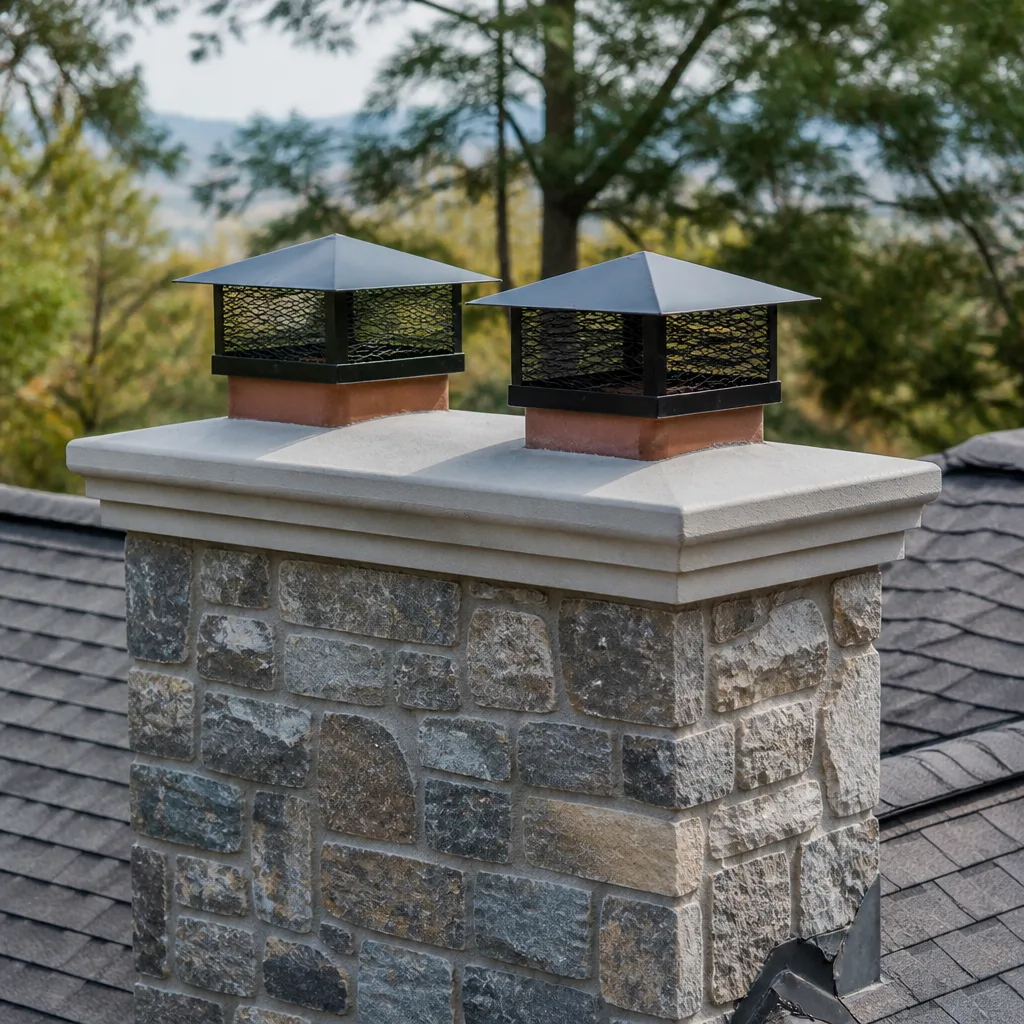 Caps & crowns
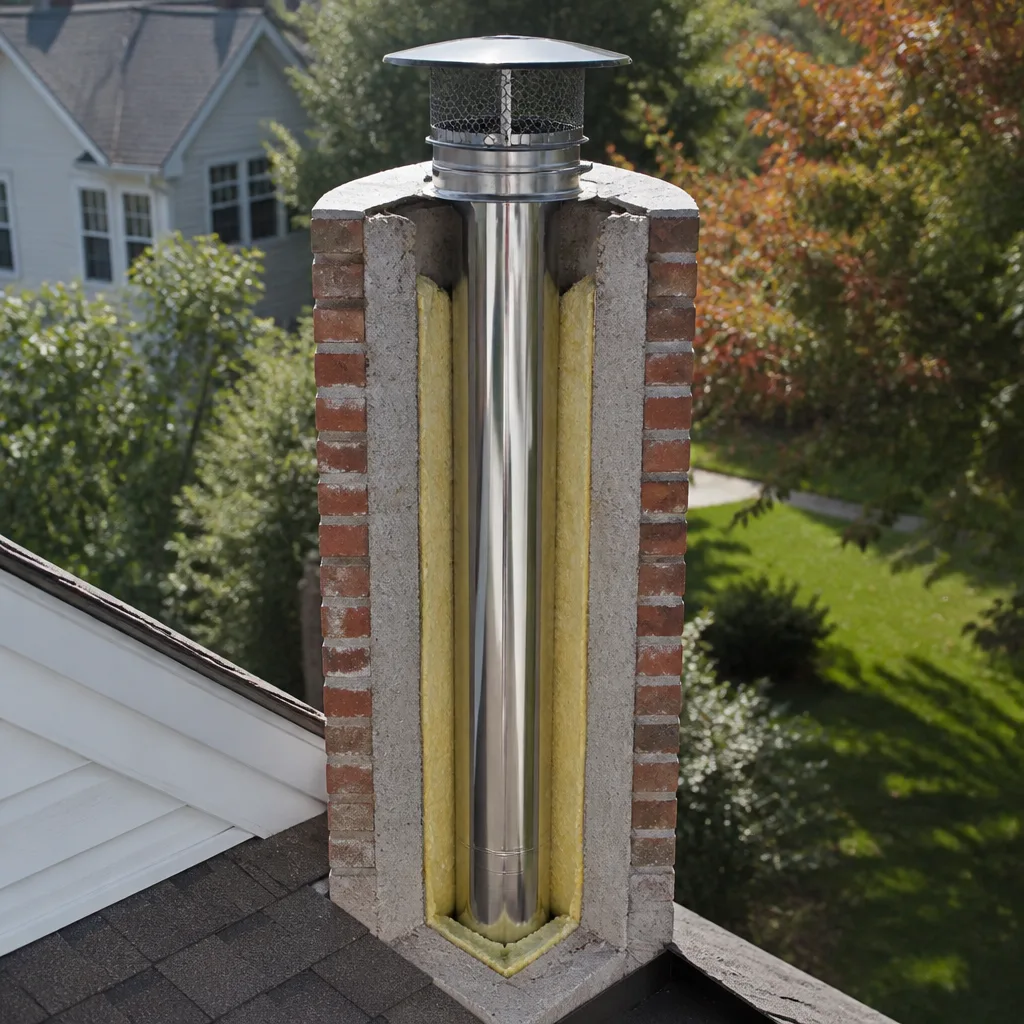 Flue relining
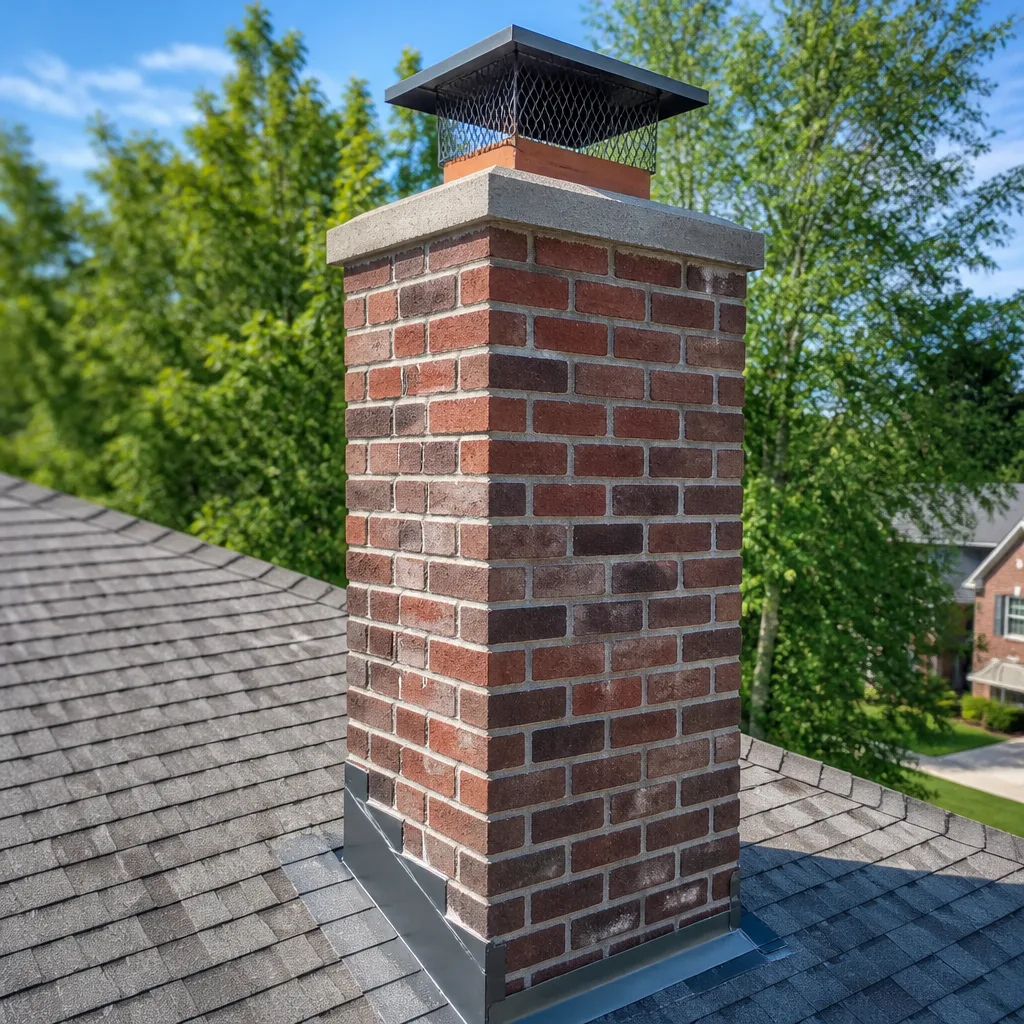 Masonry repair
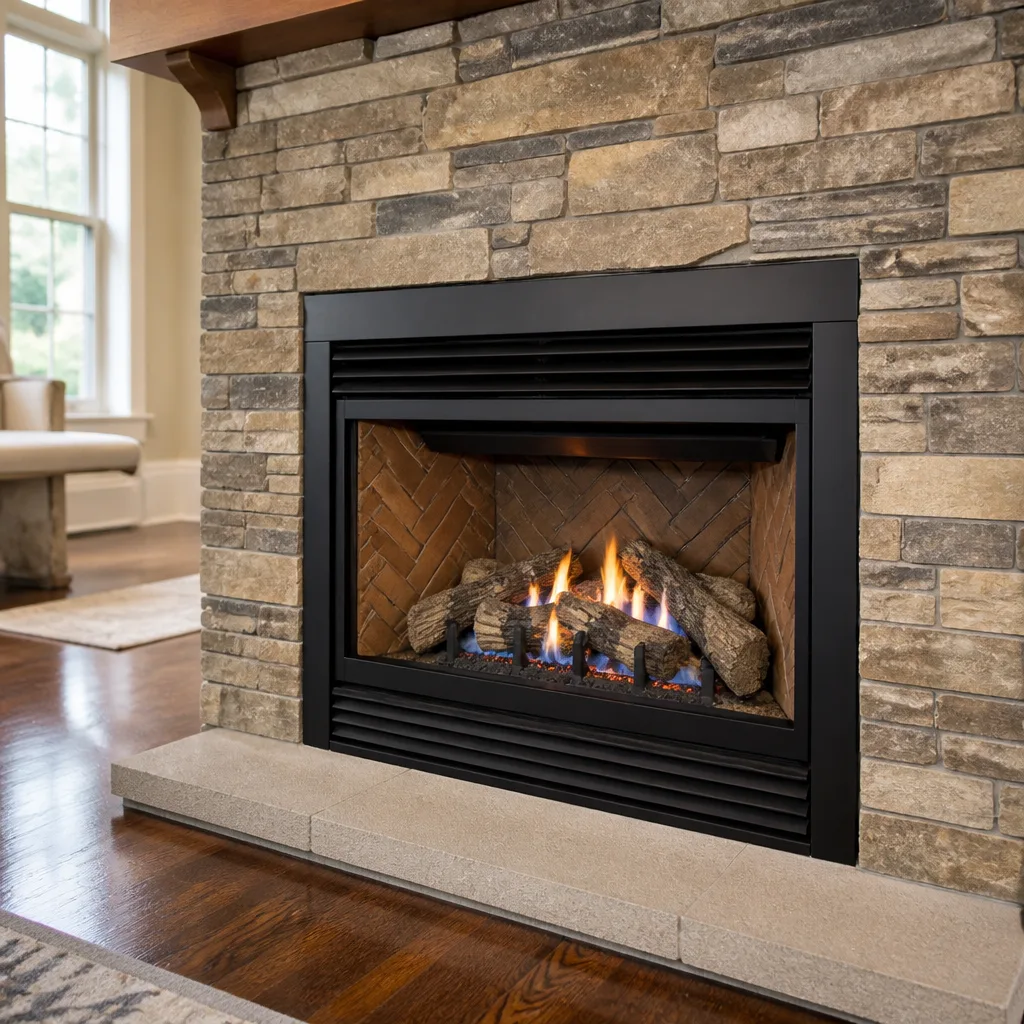 Gas fireplace service
Level 1 sweep and inspection to the NFPA 211 annual standard - flue, crown, cap, and flashing checked and photographed
Chimney sweep logs do not sweep chimneys. They loosen some creosote - which then falls where a brush and vacuum still have to collect it.
Chimney Cleaning Warning Signs: A Bakersfield Homeowner’s Reference Guide
Most chimney problems announce themselves months before they become dangerous, and most homeowners walk right past the announcement. A faint smoky smell in a closed-up house. A chalky white stain on the outside brick. A thin line of dark creosote you can see from the lawn. None of these are emergencies yet, but each one is a message, and the reason chimney fires and carbon monoxide exposures still happen is that nobody ever taught us how to read the message. This guide is that lesson. We’ll walk through every common warning sign you can see, smell, or hear in a Bakersfield home, tell you what each one probably means, and give you a simple test for whether it’s a “schedule a sweep soon” situation or a “stop using the fireplace today” situation.
Quick Answer
You need a chimney cleaning when you can smell smoke in the house when no fire is burning, see dark or oily residue on the firebox walls or flue, notice white staining on the exterior brick, or it’s been a full season since your last sweep. Stop using the fireplace right away if you see glazed, shiny creosote, hear a low rumble during a fire, or smell a sharp oily odor that doesn’t clear when the damper is open. Anything on that “stop” list is a call-a-professional-now situation, not a next-month situation.
Styles & brands we work with
- Sweep & inspection
- Caps & crowns
- Flue relining
- Masonry repair
- Gas fireplace service
Table of Contents
- Why a smoky smell in summer is the sign most homeowners miss
- The three stages of creosote, and how to tell them apart
- What white staining on your chimney exterior is telling you
- Warning signs you can spot from the ground (and when to stop looking)
- How Kern County wildfire seasons affect your chimney
- “Schedule soon” versus “don’t use the fireplace” – the decision list
- What a proper chimney sweep actually involves
Why a Smoky Smell in Summer Is the Sign Most Homeowners Miss
A wood-burning fireplace that hasn’t been used since spring should smell like nothing. Maybe a faint wood-ash smell you’d have to press your nose to the firebox to notice. If you can walk into the room in August and catch smoke on the air, that’s a signal worth taking seriously. In Bakersfield, where summers push past 100°F and the house gets closed up with the air conditioning running, a smoky smell in a shut-up room is even more telling: the house is sealed, the fireplace isn’t running, and something is pushing odor inside.
There are a few reasons this happens, and they’re all worth understanding:
- Draft reversal. Hot outside air, a cold house stack, and a tight-sealed home can flip the usual airflow so the chimney pulls air down instead of up. The smell is the chimney breathing the wrong way.
- Creosote buildup. Accumulated creosote in the flue holds a smoky odor that becomes noticeable as the weather warms and the firebox heats up in the afternoon sun.
- Blocked flue. Nesting birds, a dislodged liner section, or a heavy cap of soot at the top can trap odor and force it back into the house.
- Pressure imbalance. A tightly sealed, well-insulated home can pull air down a chimney that used to work fine before you replaced the windows.
None of those is a fire hazard by itself, but each one means the chimney isn’t doing its job, and a chimney that isn’t drafting properly also isn’t venting carbon monoxide properly. That’s why this particular warning sign matters more than it looks: it’s not just annoying, it’s the canary. Call it in, get a chimney sweep and inspection on the calendar, and you’ll know within one visit whether it’s a simple draft fix or something deeper in the flue.
How to test the smell yourself (safely)
- Open the damper fully. If the smell clears, it’s likely a draft issue you can address with a sweep and a cap.
- If the smell intensifies with the damper open, stop there. Don’t light a fire. That points to a blocked or obstructed flue, which needs a camera inspection.
- Do a second check on a cooler morning. If the smell is gone when outside air is cool, that confirms the draft-reversal pattern.
Do not use a fireplace to “test if the smell burns off.” That’s the fastest way to turn a simple draft problem into a smoke-filled living room, and it can push creosote vapors into rooms that weren’t vented for it.
The Three Stages of Creosote, and How to Tell Them Apart
Creosote is the tar-like byproduct of wood smoke condensing on the inside of your flue. Most homeowners have never been taught that it comes in stages, and that the stage matters far more than the quantity. Stage 1 creosote is light, flaky, and dusty – a brush clears it easily. Stage 2 is slick and dark, stuck to the liner walls like a coating of soot-paint. Stage 3 is glazed, shiny, and hard, and it’s the one that can ignite. Here’s the visual and smell test for each:
- Stage 1 – powdery and flaky. Looks like a thin layer of black soot. Wipes off with a rag if you could reach it (you shouldn’t try from the ground). Smell: mild, almost like campfire ash.
- Stage 2 – dark and shiny but not smooth. Clings to the flue walls, has a slight sheen, feels like soot that’s been pressed on. Smell: noticeably smoky, lingers on clothing.
- Stage 3 – glazed and mirror-like. Looks like dark glass or a hard tar coating. Visible when a light is shined up the flue. Smell: sharp, oily, almost chemical – like old varnish. This stage is where a chimney fire becomes a real possibility.
In our experience across Bakersfield, Stage 2 is the most common condition we find in homes that burn regularly and haven’t been swept in two or three seasons. Stage 3 shows up in homes that burn a lot of wood (especially green or unseasoned wood) and go long stretches between cleanings. That oily, varnish smell is the tell that the creosote has moved past the flaky stage.
Quick threshold to remember
If you can see a visible glossy coating inside the firebox walls or at the smoke shelf – that ledge just above the damper – that’s already Stage 2 or higher. Stop burning until it’s swept. A professional sweep removes it in one visit; letting another fire burn against it drives the stage higher, and once it’s glazed, it’s harder to remove and far more dangerous.
What White Staining on Your Chimney Exterior Is Telling You
That chalky white powder on the outside of the chimney is called efflorescence, and it’s the single most underreported warning sign in Bakersfield. Homeowners see it and assume the brick is “just aging.” What’s actually happening is that moisture is migrating through the masonry and depositing salts on the surface as it evaporates. The white stain is the exit wound, not the wound itself.
Two things make Bakersfield a bit unusual here. First, the extreme summer heat pulls moisture out of brick fast, so efflorescence shows up faster and more visibly than it would in a cooler climate. Second, many Bakersfield neighborhoods have mineral-heavy water, and irrigation runoff or splash-back from a nearby sprinkler line adds to the surface mineral load – which makes efflorescence look worse, and can mask what’s going on beneath. It’s the interior moisture that matters. When water is getting into the chimney structure from above – a cracked crown, a failed chase cover, mortar joints that opened up – the salts push out through the brick and tell on it.
What to do with this information:
- White, powdery, and confined to a small area. Schedule an inspection in the next few weeks. It’s usually a crown or flashing issue, both of which are fixable without rebuilding anything.
- White and crusty, spreading, or weeping after rain. Treat as urgent – the moisture has found a path in, and it will continue to widen it.
- White combined with crumbling mortar or spalling brick faces. This is structure-level deterioration. Stop using the fireplace until a technician inspects. Interior moisture at this level can mean the flue liner is compromised, and that’s a carbon monoxide issue, not a cosmetic one.
One more detail specific to this climate: don’t pressure-wash the efflorescence off. It looks like a fix and it isn’t. Pressure-washing drives more water into the masonry, accelerates the deterioration, and can blow out soft brick faces. The right response is diagnosis, then repair of whatever is letting the water in – which is exactly what a proper inspection is designed to find.
Warning Signs You Can Spot From the Ground (and When to Stop Looking)
Some of the clearest warning signs are visible from the yard. Almost none of them are things you should climb up and investigate yourself – roof work on a masonry chimney is a fall hazard, and evaluating flue condition from the top of a ladder is not a do-it-yourself job. What you can do is look from a safe distance, photograph what you see, and hand those photos to a technician. That gives them a head start, and it makes your eventual conversation much more productive.
What to look for from the ground
- Missing or damaged chimney cap. A cap with a hole, missing spark screen, or a cap that’s shifted off-center lets rain, birds, and debris straight into the flue.
- Spalling brick. Flaking or chipping brick faces, especially on the upper courses, mean water has worked in and is freezing and thawing inside the brick structure. Photo it and get an inspection scheduled.
- Crumbling mortar joints. Recessed mortar lines that look “washed out” are usually a sign of long-term moisture exposure.
- Visible liner damage. From a distance you may see a section of tile liner missing or offset above the crown. Do not get on the roof to look closer.
- Lean or out-of-plumb stack. A chimney that isn’t parallel with the house wall above the roofline is a structural concern. Get it evaluated, and don’t use the fireplace until it’s cleared.
- Debris accumulation on the crown. Nesting material, twigs, or leaves visible on top of the chimney crown is worth a call.
When to stop looking
If any of those are combined with a soot smear on the exterior brick, or you can smell smoke from outside the chimney at rest, don’t try to line up a repair yourself. That’s an inspection job. The pileup of a leak, a compromised liner, and a draft problem is what turns a manageable repair into a rebuild, and the call to make is to a professional.
When we do an inspection, findings get documented on paper. That’s a deliberate part of how we work, and it’s a courtesy the technician can’t provide if the homeowner has already climbed the roof and taken the only photos worth referencing. Sending a written record of the chimney’s condition is also useful when you’re selling the house, when you’re making an insurance claim, or when you’re planning the next step – whether that’s chimney repair or simply scheduling a cleaning.
How Kern County Wildfire Seasons Affect Your Chimney
Kern County sees wildfire smoke in the air most summers, whether or not the fire itself is anywhere near Bakersfield. That matters for your chimney because the smoke doesn’t just blow past – a good portion of it ends up in the home, and whatever doesn’t get filtered out of the air is drawn through the same building envelope that the chimney vents from. Ash and fine particles settle into gutters, roof valleys, and yes, down the open mouth of an uncapped chimney.
There’s a second, less obvious issue. After a heavy smoke event, the smell that lingers inside the house often isn’t coming from the walls or the furniture. It’s coming back down the flue from creosote and ash residue on the liner, reactivated by the smoky air. Homeowners who have just had a fire-adjacent summer often describe exactly that: a house that smells like fire even weeks after the sky has cleared.
What to watch for following a smoke-heavy summer:
- Ash drifts on the smoke shelf or firebox floor that weren’t there before the season.
- A persistent smoky smell that doesn’t respond to ventilation.
- Visible fine grit on the chimney cap or crown.
- Any sign that windblown debris has accumulated against the cap or across the top of the chase.
None of that is a fire hazard on its own, but it does two things: it makes the creosote problem worse by adding particles to the liner, and it makes the next fire season start from a worse position than it needs to. If you live in Bakersfield or anywhere across the valley and you had a smoky summer, that’s the best justification for a pre-season sweep and inspection you’ll ever have. If it’s been more than a year since your last cleaning, or a Kern County summer has passed since it, schedule one.
What about a wildfire-warning winter?
Bakersfield winters are mild, so there’s no frost-heave scenario to worry about in the masonry the way there would be in colder parts of the state. What does matter is humidity from late fall rain, which can bring out efflorescence more visibly and can push water through any cracks that opened during the summer. The fall inspection catches what summer exposed before the next burning season starts.
“Schedule Soon” Versus “Don’t Use the Fireplace” – The Decision List
This is the section to screenshot and keep on your phone. The line between the two categories isn’t subtle once you know it, and every item on the “don’t use” list is there because of a real risk to the people in the house, not because of a sales opportunity.
Schedule a sweep in the next few weeks if you see or smell:
- A faint smoky smell in the living room when no fire has been burning.
- Light soot or Stage 1 creosote dust on the firebox walls.
- White efflorescence confined to a small area of exterior brick.
- A missing spark screen or a cap that’s a little worse for wear.
- It’s been a full season since your last cleaning, and you burn firewood regularly.
- You had a smoky Kern County summer with heavy ash fall.
Stop using the fireplace until you’ve had it inspected if you see, smell, or hear:
- Glazed, shiny, tar-like creosote visible on the flue or firebox walls.
- A sharp, oily, varnish-like smell that doesn’t clear with the damper open.
- A low rumble or roar coming from the chimney while a fire is burning (this can be a chimney fire, and it doesn’t always look dramatic from inside).
- Soot smeared on the exterior brick face above the firebox.
- Spalling brick or crumbling mortar at the roofline.
- Any visible liner damage – cracks, missing sections, or tile that looks offset.
- A smoky smell that’s stronger in a room above the fireplace than the room with the fireplace (this can indicate a leak in the flue below a closed damper).
- Your carbon monoxide detector going off – open doors and windows, leave the house, and treat it as a CO incident. Do not enter to “check the fireplace.”
That last item is the one to take most seriously. Carbon monoxide is colorless and odorless, so nothing on this list looks or smells like it – that’s what the detector is for. If it sounds and you use a wood-burning fireplace, call the utility and treat the fireplace as a possible source until a professional rules it out.
What a Proper Chimney Sweep Actually Involves
A chimney sweep is not a quick brush-and-go. Done right, it’s a sequence, and the sequence is what makes it worth doing at all. Here’s what a thorough sweep looks like, so you can tell when you’ve hired a professional and when you’ve hired someone to wave a brush around.
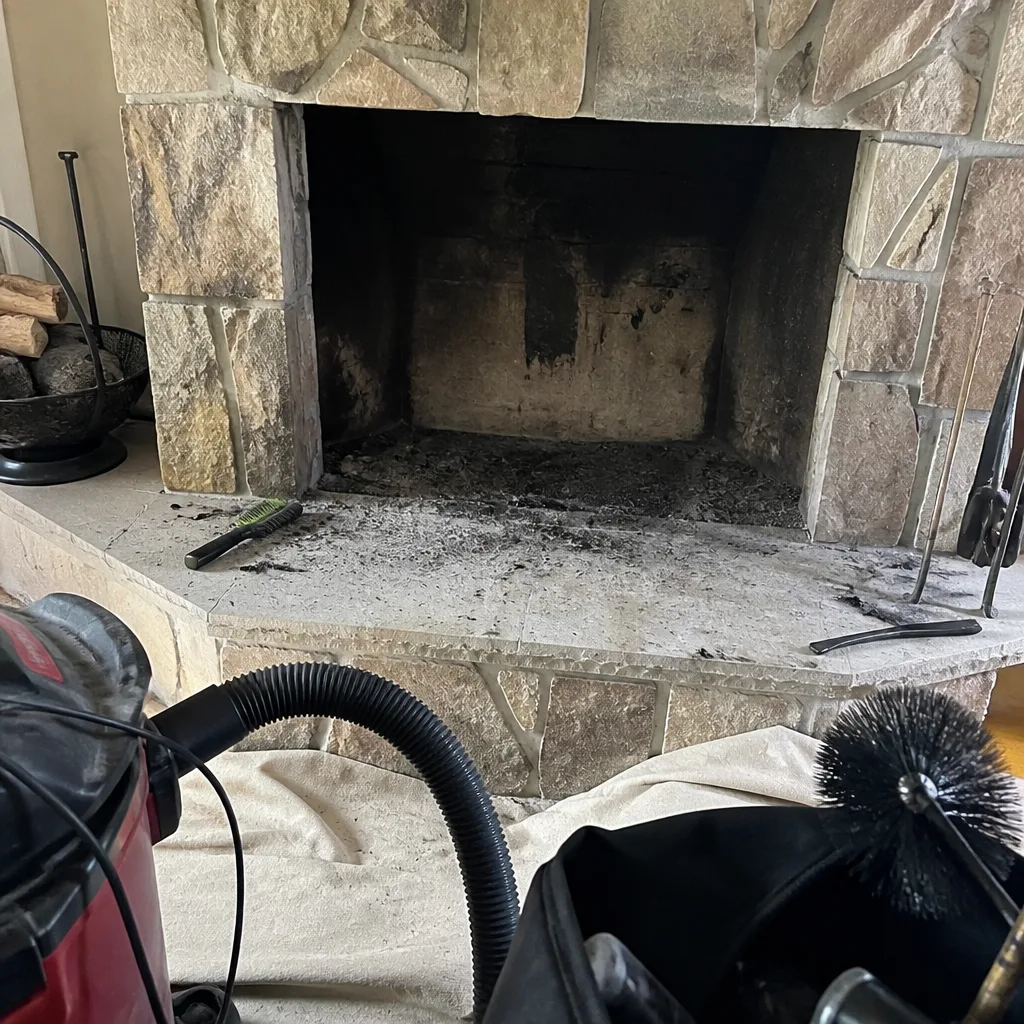
- Set up the work area. Drop cloth or a canvas over the hearth, a shop vac with a HEPA filter running, and the client’s furniture covered or moved back. No soot in the living room is step one.
- Inspect the firebox and smoke shelf. Findings get checked in plain view, and a light goes up the flue before the brush touches it. Anything concerning – glazed creosote, a cracked tile, a rusted damper – gets noted, and the homeowner gets shown what the technician sees.
- Sweep the full flue, top to bottom. A rotating brush sized to the flue diameter, run to the very top of the stack. Partial sweeps are how liners get missed above the first few courses.
- Clean the smoke shelf and firebox. This is where creosote build-up hides in most Bakersfield fireplaces – behind the damper on that shelf – because it’s out of view from the room.
- Camera inspection of the flue. Video or photos a homeowner can actually see. Not a verbal “looks good.”
- Exterior and cap check. If the crown or cap needs service, it gets noted before the technician leaves, with photos included.
- Written report. Documented findings, not verbal. Useful if you’re the one tracking a repair over several seasons.
The reason the sequence matters: sweeping and repair and inspection really are one job. A creosote problem often turns out to be an air-flow problem, which turns out to be a damaged flue tile, which turns out to be a crown leak. If your sweep can only sweep, all that second and third knowledge is lost, and the homeowner ends up booking the same visit again with a different company. When we sweep, inspect, and repair as one scope of work, the technician who finds the problem is the same one who solves it, and there’s no hand-off gap where the finding gets lost.
For problems deeper in the liner – deteriorated flue tiles, cracked mortar joints that made the year of smoke worse – we work with HeatShield restoration and DuraFlex liner systems. HeatShield is a documented way to restore a deteriorating flue liner without full replacement in qualifying systems, and it’s one of the capabilities that separates a real chimney specialist from a sweep service. If HeatShield is not the right answer for the specific flue, DuraFlex relining is an option we work with as part of the same visit scope.
Common Mistakes to Avoid
- Waiting until the first fire of the season to call. In Bakersfield, that’s usually late October or November, right when every other homeowner has the same idea. A pre-season sweep scheduled in September means a clean chimney and a clear inspection before the first fire – and no scramble when the nights cool off.
- Burning green or unseasoned wood because it’s cheaper. Green wood produces far more creosote per cord than seasoned hardwood does. If you’re already burning a lot, that’s the biggest variable you control, and switching woods is a real way to slow creosote build-up between sweeps.
- Ignoring the white stain because “it’s just the brick.” Efflorescence is the surface symptom of a water problem that’s eating the structure from the inside. Bakersfield’s summer heat makes it look cosmetic; if a technician doesn’t look at it, it gets worse.
- Pressure-washing the efflorescence off. It looks like a fix, but it drives more water into the masonry and can destroy the brick face. Diagnosis and repair is the right answer.
- Thinking the chimney is fine because there’s no visible creosote from the firebox. The most dangerous deposits happen in the flue, not the firebox, and the smoke shelf hides a lot. Camera inspection is how a proper check actually works.
- Skipping the cap or “fixing” a damaged crown with caulk. A cap or crown that’s failed is a water entry problem, and caulk on a mortar crown is a short bridge to a much bigger repair. Get it done properly and be done with it.
- Using the fireplace to “burn off” a smoky smell. That’s the fastest way to make a small draft problem into a smoke-damaged room, and it does nothing for the creosote underneath.
See the difference
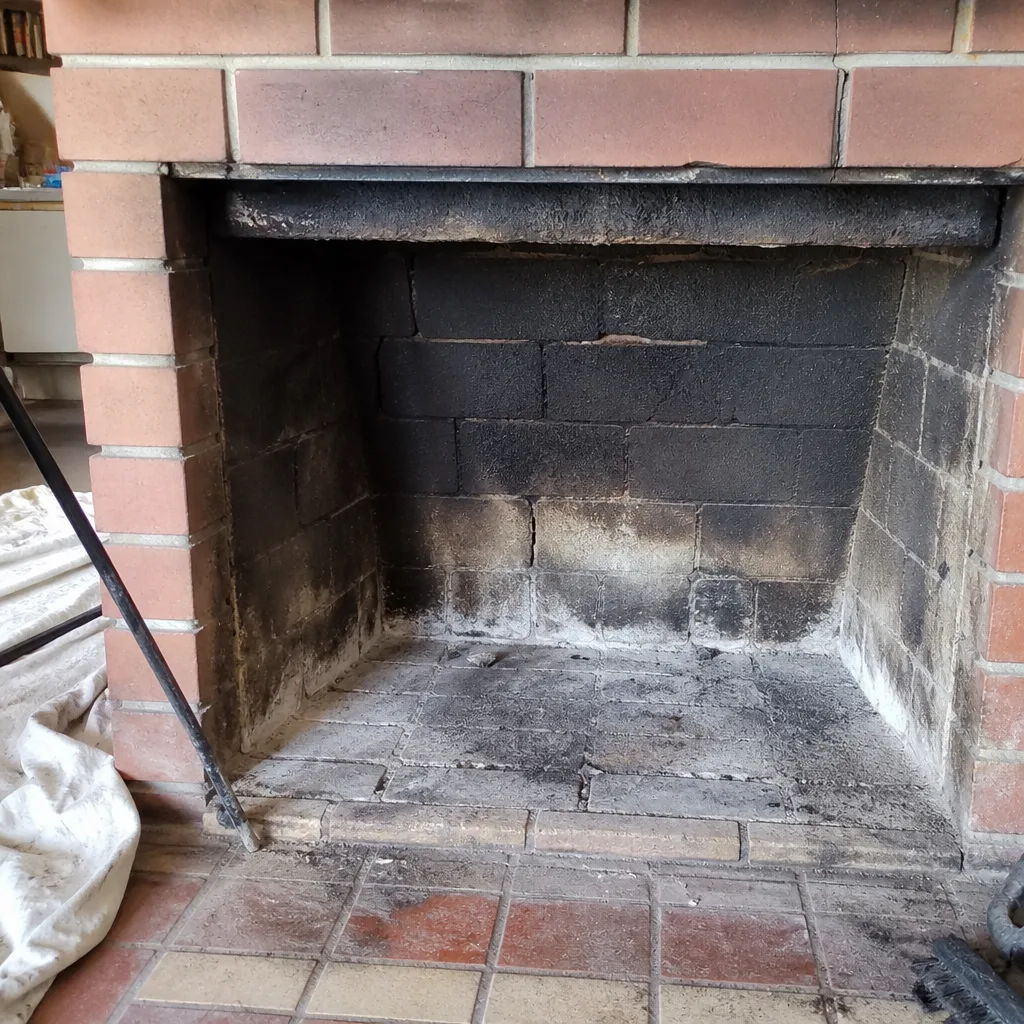 Before
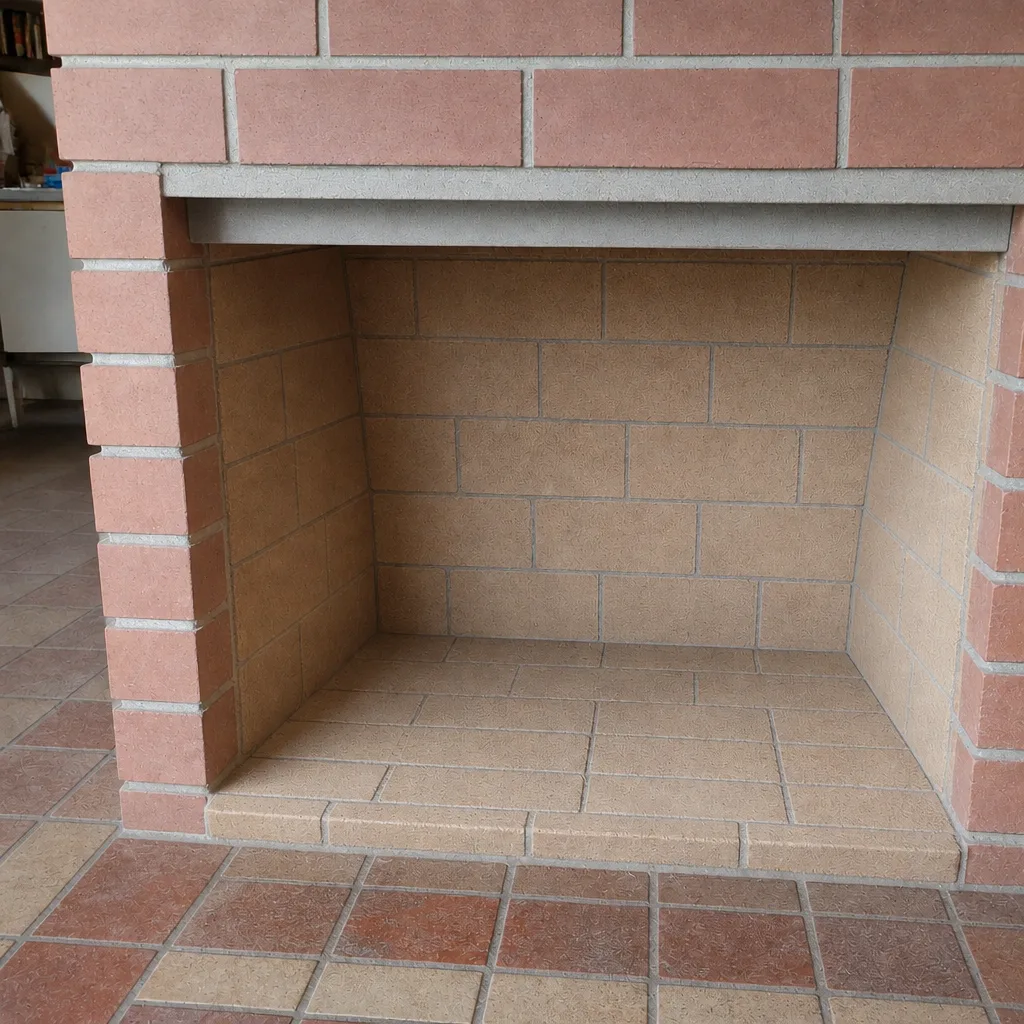 After
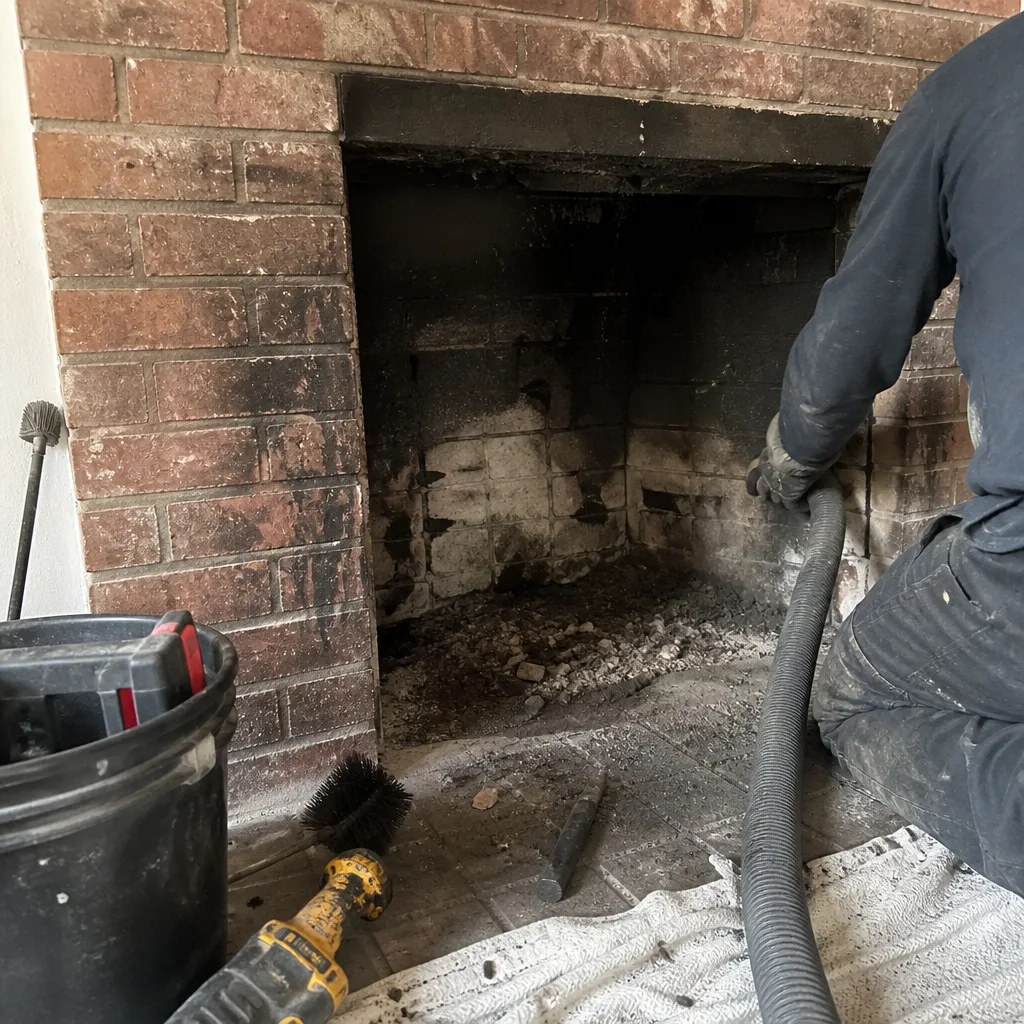 Before
 After
 Before
 After
When to Call a Professional
Call a chimney professional when any item lands on the “don’t use the fireplace” list above. Call when you can see white staining on the exterior that wasn’t there a few months ago. Call when you smell smoke when no fire is burning. Call when you’ve burned regularly for a full season without a sweep. Call if a carbon monoxide detector has ever gone off and you use wood or gas appliances, even once.
What you shouldn’t do is climb up and diagnose it yourself. The roof is the wrong place to be judging a flue liner by eye, and masonry work at height is a straightforward fall hazard. Photograph what you can see from the ground, note where and when you see it, and let a trained technician inspect with a camera and a proper ladder. Our technicians have up to 9 years of experience assessing exactly these signals, and getting a real diagnosis is much faster than guessing.
Harvest Chimney Sweep offers free estimates in Bakersfield. Call (833) 605-6632. We answer 24/7. Fast dispatch from 7am to 7pm, Sunday through Friday. We sweep, we inspect, and we repair, so the finding and the fix happen in the same engagement – not two calls to two companies. If you’re reading this in the fall and wondering whether to book before the first fire, the answer is yes. If you’re reading it in the spring, the answer is also yes, because that’s the season when the schedule has room and the smoke shelf is easiest to read.
Frequently Asked Questions
Once a year while you’re burning regularly, and after any heavy Kern County smoke season even if you skipped the winter. If you burn continuously through the cooler months, once a year is the minimum, and two cleanings across the year is common. The stage of creosote matters more than the calendar, which is why a camera inspection should come with every sweep. Call (833) 605-6632 for an exact quote on a sweep and inspection – estimates are free.
You can spot a few clear signals from the ground, but not enough to skip a real inspection. White efflorescence, soot smears on the brick, and a damaged cap all mean it’s time for a professional to look. A clean-looking exterior doesn’t mean a clean flue, though – most creosote build-up isn’t visible from outside. Photograph anything that looks off and get a professional out. Call (833) 605-6632 and we’ll get it scheduled.
No, and it’s one of the most reliable early warning signs there is. If you smell smoke when no fire has been burning, that’s a draft reversal, a creosote odor, or a blocked flue – three things a technician needs to sort out before your next fire. Don’t light a fire to test it. Call (833) 605-6632 to have it looked at.
It means moisture is moving through the masonry. The white powder is salt left behind as water evaporates, and Bakersfield’s heat makes the process faster and more visible than in cooler areas. It’s a symptom, not the problem itself, and the right response is to find and fix the water source. A proper inspection will identify it. Call (833) 605-6632 for an estimate on an inspection and follow-up repair.
Stage 1 smells like mild campfire ash; Stage 2 is noticeably smoky; Stage 3 is sharp and oily, almost like varnish or chemical solvent. Stage 3 is the dangerous one – it’s glazed and hard, and it’s the stage where a chimney fire becomes a real possibility. If you can see a glossy coating on the flue walls, treat it as urgent. Call (833) 605-6632 to book a sweep and remove it safely.
That depends on how much of the liner is intact, and there’s no way to answer it safely without a camera inspection. In many cases, a deteriorating-liner flue can be restored with HeatShield rather than replaced outright; where restoration isn’t the right answer, a DuraFlex liner system is what we’d typically use. Don’t guess – get the camera on it. Call (833) 605-6632 for a free estimate on the inspection that will tell you which path you’re on.
The Bottom Line
Chimney warning signs are almost always visible or smellable long before they become dangerous. The problem is that nobody trains homeowners to read them, so most people wait for a signal that’s impossible to miss – a chimney fire, a CO alarm, or a visible structural failure – and by then the repair is expensive. Use this guide as your decision list: the smoky summer smell, the oily Stage 3 odor, the glazed creosote, the white staining, the spalling at the roofline. Schedule soon for the small things. Stop using the fireplace for the serious ones. And take a minute to photograph what you can see from the ground – that’s the cheapest diagnostic test available, and it’s the one a professional expects when a homeowner calls.
We sweep, inspect, and repair as one job in Bakersfield because those three services are the same diagnostic conversation. If you’re ready to schedule, or just want a second opinion on what you’re seeing, call (833) 605-6632 for a free estimate. We’ll tell you plainly what needs attention now and what can wait.
You can also learn more about our full range of services on the Harvest Chimney Sweep homepage, or read up on our service area in Bakersfield.
Written by the team at Harvest Chimney Sweep.